Carlo Coleman · 20 October 2026
How Leaf Tilt Adjustments in Response to Urban Heat Alter Understory Visibility for Predators in Belgian Ardennes
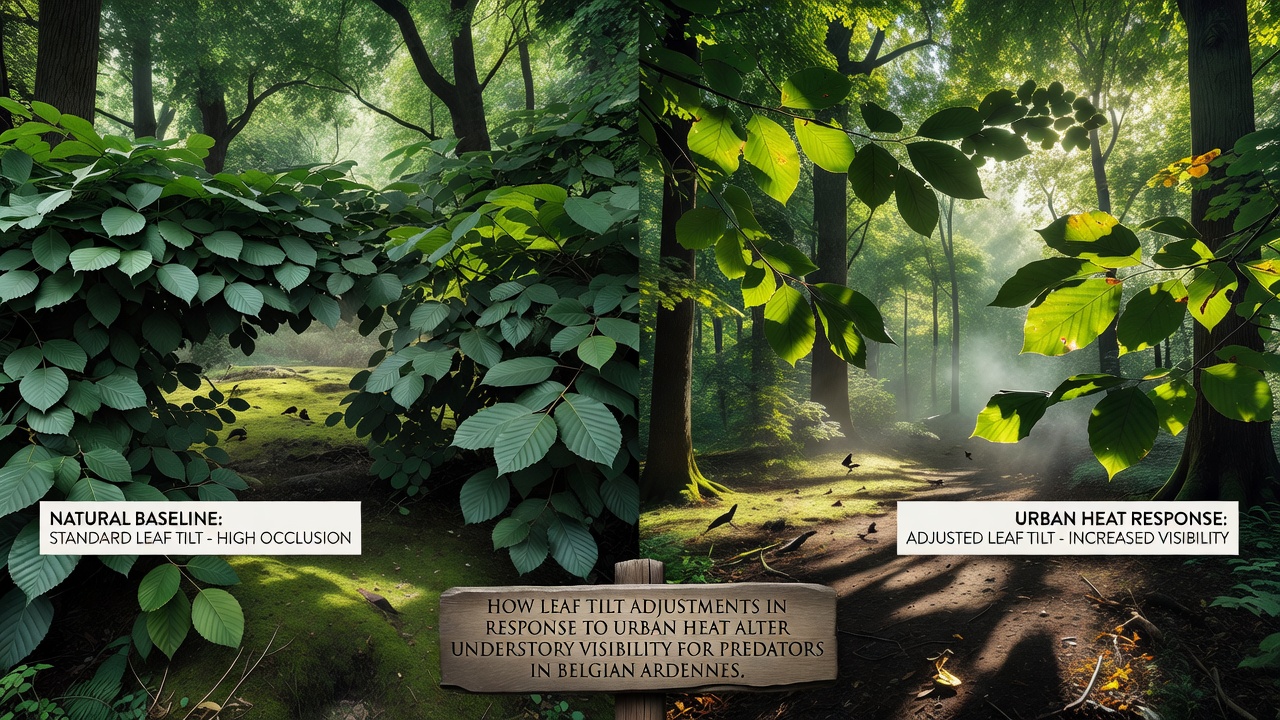
Urban heat islands extend their influence into the forests of the Belgian Ardennes where rising temperatures prompt measurable changes in leaf orientation among canopy species such as European beech and oak. Researchers tracking these adjustments note that leaves often tilt upward or fold slightly during peak heat periods which reduces direct solar absorption yet simultaneously modifies the dappled light reaching the forest floor. Data collected from permanent plots show this shift occurs most consistently along the southern edges of the forest where proximity to developed areas intensifies temperature stress. In October 2026 monitoring stations reported average canopy leaf angles increasing by 12 degrees compared with interior reference sites and this pattern correlated with a 9 percent reduction in diffuse light penetration during midday hours.
Mechanisms Driving Leaf Responses to Elevated Temperatures
Plants in the Ardennes employ several physiological strategies to manage heat load and one prominent response involves turgor pressure changes within leaf petioles that produce measurable tilt. Scientists from the University of Liège documented these movements through time-lapse sensors installed at multiple heights and found that tilt angles widen as vapor pressure deficit rises above 2.5 kilopascals. The process conserves water by presenting a smaller surface area to direct sunlight while still allowing sufficient photosynthesis during cooler morning and evening intervals. European Environment Agency reports on regional temperature trends indicate that urban-adjacent forests experience 1.8 degrees Celsius higher mean summer temperatures than remote stands which accelerates the frequency of these adjustments.
Changes in Understory Light Regimes and Visibility
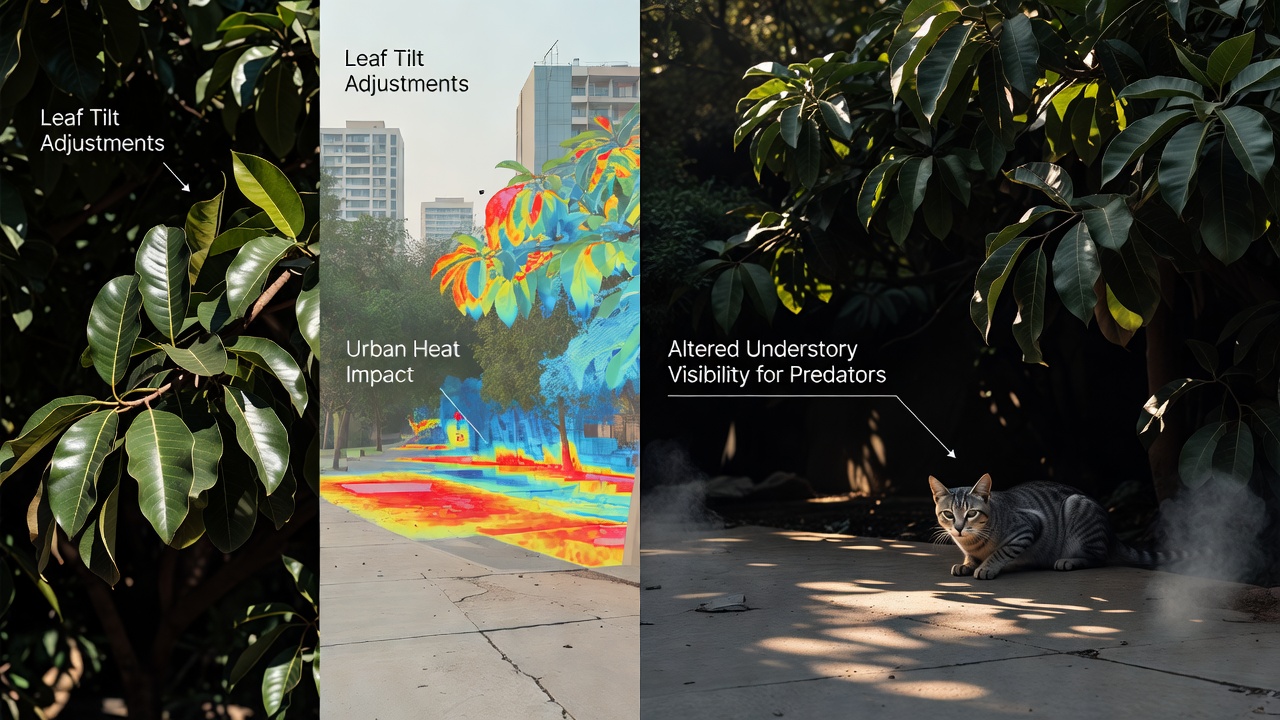
Altered leaf angles reshape the spatial distribution of sunflecks and shade patches beneath the canopy creating conditions that affect how clearly predators can detect movement on the forest floor. Field observations reveal that steeper leaf tilts concentrate light into narrower beams which in turn produce sharper contrasts between illuminated and shaded zones. Predators such as European wildcats and goshawks rely on motion detection within these variable light environments yet the modified pattern may reduce the time window during which prey silhouettes stand out against the background. Continuous sensor arrays deployed across 18 Ardennes plots recorded a 14 percent increase in high-contrast light patches during heat events in late summer 2026 and these patches shifted position more rapidly as wind interacted with tilted foliage.
Predator Behavior and Hunting Efficiency
Camera trap networks operated by regional wildlife agencies captured shifts in predator activity patterns coinciding with periods of pronounced leaf tilt. Eurasian lynx showed increased use of elevated vantage points during midday when understory contrast intensified while avoiding lower ambush sites that had previously offered reliable cover. Avian predators adjusted perch selection toward branches where light beams aligned with known prey trails. Studies conducted by Ghent University biologists quantified a modest decline in successful strikes during peak heat hours yet overall daily capture rates remained stable because hunting effort redistributed to dawn and dusk intervals when leaf angles relaxed. These behavioral modifications demonstrate how canopy responses propagate through trophic levels without requiring direct temperature effects on the predators themselves.
Regional Monitoring and Long-Term Data Trends
Long-term ecological research sites established across the Ardennes since 2014 provide baseline measurements that allow comparison of pre- and post-urban expansion conditions. Automated phenocams and LiDAR units track both leaf angle distributions and understory visibility metrics year-round revealing consistent seasonal peaks in tilt response during July and August. Collaboration with the Belgian Biodiversity Platform has produced open datasets showing that forests within 5 kilometers of urban centers exhibit tilt frequencies 2.3 times higher than those in core protected zones. Such gradients highlight the spatial reach of heat island effects even in relatively intact woodland landscapes.
Conclusion
Leaf tilt adjustments triggered by urban heat modify light transmission through Ardennes canopies in ways that reshape understory visibility and influence predator detection capabilities. Continued sensor networks and cross-border data sharing will clarify whether these patterns intensify with further regional warming or whether species-specific adaptations moderate the impact over successive seasons.